
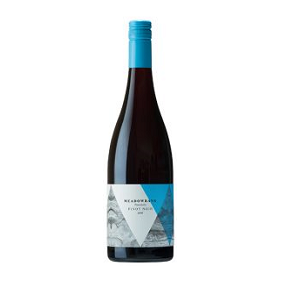
Description
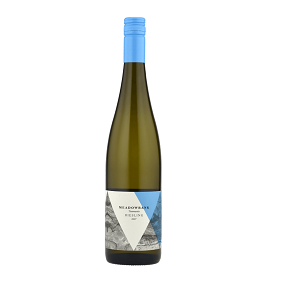
“Meadowbank’s vineyard is one of the most important in Tasmanian wine; a whole host of the best quality and most interesting Tasmanian wine brands source fruit from it. The label and winery itself has had a bit of a hiatus but renowned winemaker Peter Dredge has teamed up with the Ellis family to kick things back into life.” Campbell Mattinson
The winemaking fortunes of the Meadowbank label have, as Mike Bennie puts it in The Wine Front, “ebbed and flowed” over the years. In late 2015, all that changed with the arrival of Peter Dredge. The quality of the Ellis family’s Derwent Valley vineyard has never been in doubt. Planted in 1974 at Glenora, near the top end of the Derwent River, Gerald Ellis, with his wife Sue, purchased the property in 1976. Since that time the couple have overseen four major vineyard expansions, the most recent a 10-hectare planting of Pinot Noir, Chardonnay, Syrah and Gamay in 2016. Moderated by the river, Meadowbank’s vines are rooted in loose sand and sandstone overlying dark brown, coffee rock, rich in iron oxides and organic matter. It’s what our gumbooted wine grower friends might call “quality dirt”. It’s a terroir that has developed an impressive fan base, ranging from Kate Hill, Domaine Simha, Glaetzer Dixon and Ministry of Clouds, to larger producers such as House of Arras and Bay of Fires.
Peter Dredge’s relationship with Meadowbank goes back to 2010 when he was the man at Bay of Fires/Arras. At that time Accolade leased a walloping 32 of Meadowbank’s then 42 hectares. Five years later, during the 2015 vintage after Dredge had left Accolade to downsize, (establishing his own Dr Edge wine label and his consulting company) he took a call from Gerald Ellis. Ellis wanted to resuscitate the historic Meadowbank label and he wisely wanted Dredge to run the show as a part owner/winemaker. The plan was to utilise the best vines in the vineyard and to do something special. It was an offer that was impossible for Dredge to pass up.
When the news of the partnership broke in 2016, Campbell Mattinson wrote, “Peter Dredge at Meadowbank? Now that should be interesting.” He wasn’t wrong. Regardless of what has come before, you can expect something completely different from this point forward. Peter Dredge brings an enormous level of industry respect with him into the relationship. This is not misplaced. His first set of Meadowbank wines were seriously impressive and helped him to scoop the 2017 Young Gun of Wine People’s Choice Award. They have also received a range of glowing reviews from the critics.
Clearly, Dr Edge (the nickname given to him at Petaluma) has wasted no time in getting down to business, and Meadowbank’s 2016 releases immediately show us what we have been missing from this slumbering Tassie Titan. Of course, it’s early days, so we can and should expect even greater heights as Dredge and the Ellis family (Gerald and Sue Ellis, their daughter Mardi and her husband Alex Deane) begin to make significant changes in the vineyard. While the new regime’s first vintages are being made, under Dredge’s sole control, at the Moorilla Winery at MONA, the long-term aim is to restore the old winemaking facility at Meadowbank – once active in the 80s and 90s. Regarding the fruit source – specific parcels for the Meadowbank wines have already been identified and allocated. These particular vines are now managed without herbicides and the plan is to explore full organics – something extremely rare in Tassie and an evolution that can only result in even higher quality. And all the fruit is hand-picked.
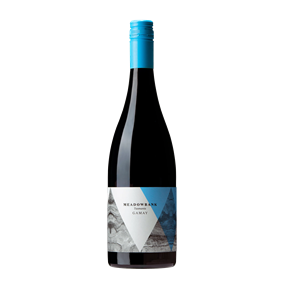
About this wine: The fruit for Meadowbank’s lithe, detailed Pinot is drawn from a north-facing parcel of vines planted by Gerald Ellis in 1987 (which winemaker Peter Dredge thinks is probably a combination of clones MV6 and D5V12). The slopes descend over Meadowbank’s typical loose sand and sandstone over dark brown coffee rock (sand cemented by iron oxides and organic matter), and these vines benefit from lovely exposure and airflow.
Vintage 2024 here was very dry; although temperatures were generally fairly moderate, there was barely any rain. Happily, there was a return to more “normal” yields relative to a run of leaner years, and the quality was exemplary again. The fruit for the 2024 Pinot was harvested by hand over two weeks. The wine fermented on skins for two weeks before being pressed to finish fermentation in a mix of old and new French oak barriques. It then matured in oak for nine months (just 10% new) before bottling without fining. Look out for the intensely fragrant, spiced red fruit aromas so typical of the Meadowbank site, alongside subtle undergrowth earthiness and sappy, cherry-spiked freshness. It isn’t a powerhouse, however (unlike many of our most revered examples); this is not what the Meadowbank site delivers, but a wine of perfume, sinuous charisma and dangerous drinkability!
Winner – Jimmy Watson Memorial Trophy for Best Young Red Wine – 2025 Melbourne Royal Wine Awards
Winner – James Halliday Trophy for Best Pinot Noir – 2025 Melbourne Royal Wine Awards
RRP $67 Our Special Price $59.99 – LAST OF THIS VINTAGE!!


Reviews
There are no reviews yet.